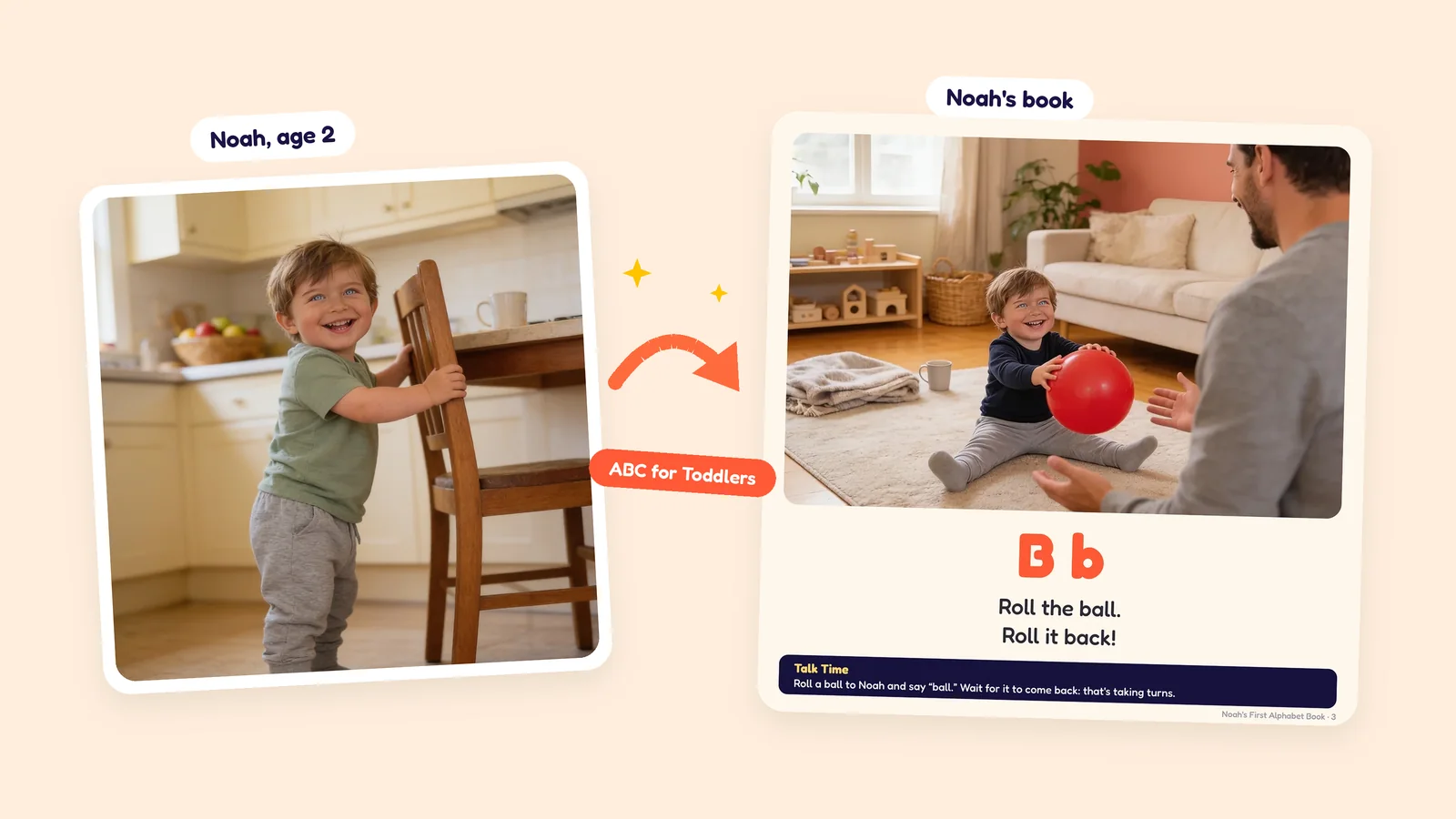
"He understands everything. He just won't say it."
If that sounds like your house, you are in good company. It is one of the most common worries parents of toddlers type into a search bar. Your child brings you their shoes when you say it's time to go. They point at the dog. They laugh at the right part of the story. But the words are not coming yet.
This post covers what that can mean, simple things to try at home, and when to ask for help. We are a small team that makes children's books, not doctors. After you, your child's doctor or a speech-language pathologist is the best person to ask.
2 year old not talking but understands everything: what it can mean
Understanding words and saying words are two different skills. Most children understand far more than they can say. For some toddlers, the gap is just wider for a while.
A child who understands a lot is showing you some good things:
- They are listening.
- They are learning what words mean.
- They want to connect with you.
Many late talkers do catch up. ASHA, the American Speech-Language-Hearing Association, says about 50 to 70 percent of toddlers who are late to talk catch up with their peers by the late preschool or school years. Some do not, though, and some need a little extra support. That is why it is worth a chat with a professional, even while you try the ideas below.
And one more thing. This is not your fault. Busy days, screens now and then, a second language at home, a quiet personality: none of these mean you have failed. You are here, reading about how to help. That says a lot.
What about an 18 month old not talking?
At 18 months, the range is wide. The CDC milestone checklist says most children by 18 months try to say three or more words besides "mama" or "dada", and follow a one-step direction without a gesture, like "give it to me".
Words at this age can be rough. "Ba" for ball counts. So does a sound that always means the same thing, like "mmm" for milk. Pointing, waving and bringing you things are all ways of talking, too.
If your 18 month old is not trying words yet, it is fine to ask your doctor about it. The American Academy of Pediatrics recommends developmental screening at 9, 18 and 30 months, so the 18 month checkup is a natural time to bring it up.
How to get toddler to talk: 8 ideas to try at home
You do not need special toys or a set lesson time. These ideas fit into play, meals, bath time and books. Pick one or two and use them often.
- Pause and wait. Say something, then stop. Count to five in your head. Look at your child with a happy, expectant face. Give them a turn to make a sound, point or try a word. Many of us fill the quiet too fast.
- Point and name. When your child points, name the thing in one clear word. "Cup!" Keep it short. One or two words at a time is easier to copy than a full sentence.
- Say it again. Repeat the key word a few times in different ways. "Bubbles. More bubbles. Pop, bubbles!" Each repeat is another chance to hear it and try it.
- Cheer every try. If your child says "ba" for ball, smile and say "Ball! Yes, ball!" Copy their sound, then add the word. Skip "say it properly". Pressure can make talking feel hard.
- Use baby signs. Show simple signs for more, all done, help and eat at meals and play. Say the word each time you sign. Signs give your child a way to tell you what they want while the words are on their way.
- Offer a choice. Hold up two things. "Apple or banana?" Wait. A point is fine. A sound is great. Say the word back: "Banana!"
- Talk about what you are doing. Narrate your day in short bits. "Shoes on. Door open. Outside!" Keep your words simple and real.
- Read the same book again and again. Repeats are good for talking. When your child knows a book well, stop before a word they know and wait for them to fill it in. Caring for Kids, from the Canadian Paediatric Society, suggests pointing at pictures, asking "where is the...?" and giving your toddler time to answer.
A small note on books. Books with few words and lots of repeats are easiest to talk about. Clear, real pictures help too. We share our top picks in Best Books for Late Talkers (Ages 1 to 3).
Things you can let go of
A few worries come up a lot. You can set these down.
- Comparing to cousins or friends. Children learn at different speeds. Your child is on their own path.
- Asking them to perform. "Say bye-bye to Grandma!" often makes toddlers go quiet. Say the word yourself instead, and let them join in when they are ready.
- A second language at home. Speaking your home language is good for your child. Keep talking and reading in the language you know best.
When to talk to a professional
Trust your gut. If something worries you, talk to your pediatrician or family doctor, or to a speech-language pathologist. Asking early is always okay. ASHA's public guide for families says you don't have to "wait and see" before getting support from a speech-language pathologist.
The CDC milestone checklist for age 2 says most children by then say at least two words together, like "more milk", and point to things in a book when you ask, like "Where is the bear?"
Ask sooner if your child:
- Does not seem to understand simple words or directions.
- Uses few gestures, like pointing, waving or nodding.
- Does not look at you or respond to their name.
- Loses words or skills they used to have.
- Has had lots of ear infections, or you wonder about their hearing.
In the US, you can also contact your state's early intervention program. In Canada, many provinces let parents contact a preschool speech and language service directly, and your family doctor or public health unit can point you there.
Sources:
- CDC milestones by 18 months and by 2 years
- CDC: Milestones and acting early
- ASHA Practice Portal: Late Language Emergence
- Late Talker or Language Problem? (ASHA's public site)
- Caring for Kids (Canadian Paediatric Society): Your busy toddler
A book for Talk Time
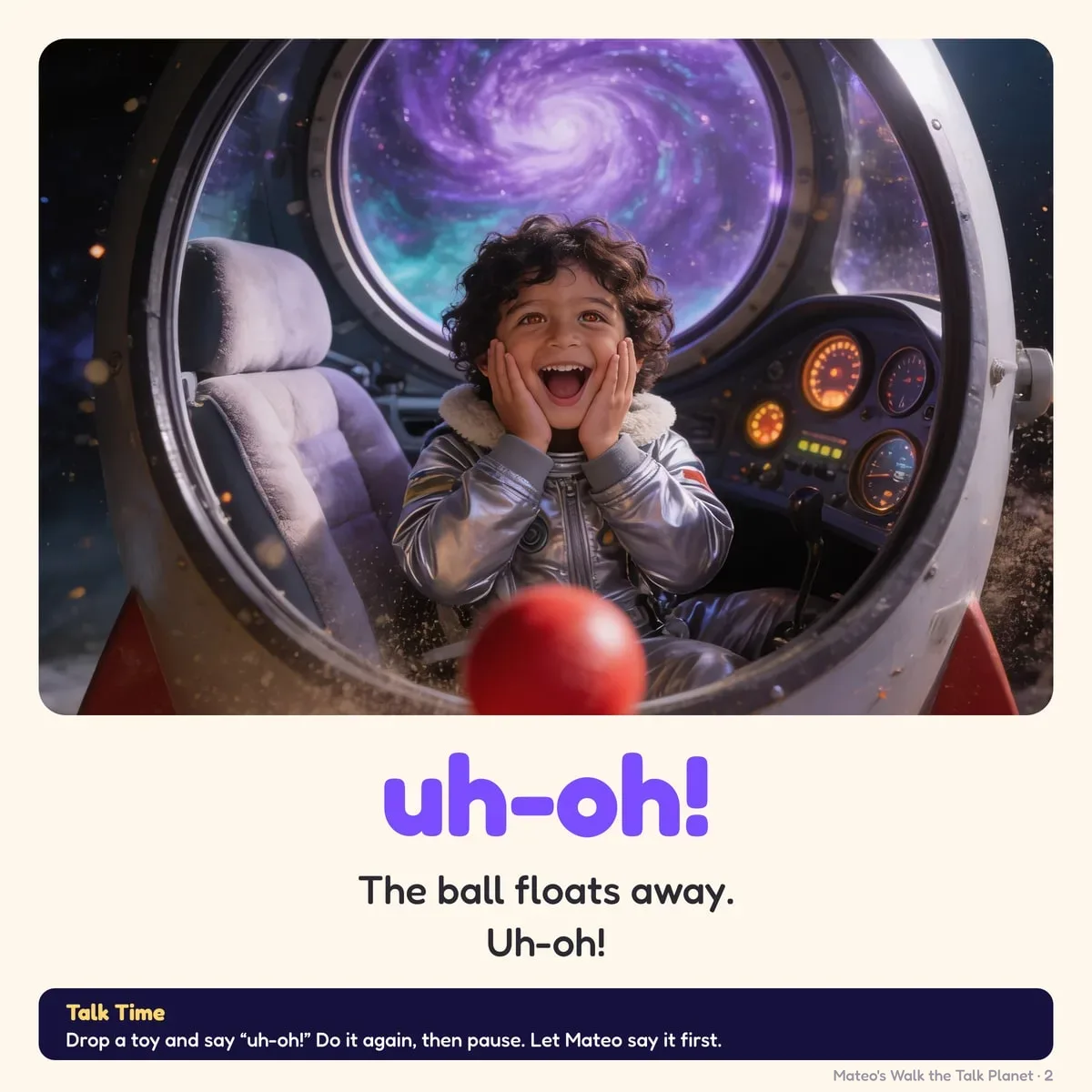
We made My First Words: Walk the Talk Planet for moments like these. Your child is the hero, and the people they love come along to Talk Planet. Each page has one or two words, like "uh-oh!" and "vroom!", and a Talk Time tip for you, like "pause and wait". You can add words your child already says, home language words and the signs you use.
You see the cover free before you pay. For more ideas, visit our page for all kinds of talkers.
A fun story with play ideas for parents. Not a substitute for speech therapy.