Somewhere between the first birthday and the second, words start to arrive. First one, then a handful, then, for many toddlers, a sudden rush. If you're wondering which words to focus on, this guide will help. It explains what makes a good first word, gives you a printable list of 60 to start with, and shows how to teach them in the moments you already have.
What makes a good first word?
The best first words for a toddler share a few things.
- They're about things your child cares about. Milk, dog, ball, Mama. Words for the people, food and toys in their day.
- They're useful. Words like more, up, help and all done get your child something they want. That's powerful motivation.
- They're easy to say. Short words with sounds like m, b, p, d and n, made at the front of the mouth, tend to come first.
- They're easy to show. Things you can point to, hold up or act out are easier to learn than ideas.
- They come up again and again. A word your child hears ten times a day is learned faster than one they hear once a week.
Sounds count too. Animal sounds and fun noises like uh-oh, vroom and woof are often among a toddler's first "words", and they're a great bridge to real ones.
A printable list of 60 first words
Print this page, or copy the list onto a sticky note for the fridge. You don't need to teach all of them. Pick five or six that fit your family's day and start there.
People
- Mama, Dada (or what your child calls you)
- baby, Grandma, Grandpa
- your child's own name
- names of siblings and pets
Food and drink
- milk, water, juice
- banana, apple, cracker
- cookie, cheese
Toys and things
- ball, book, car
- teddy, bubbles, block
- cup, spoon, shoe, hat
Animals and sounds
- dog, cat, duck, cow
- woof, meow, quack, moo
Actions
- up, down, go, stop
- eat, drink, sleep, wash
Little words that do a lot
- more, all done, help
- hi, bye-bye, no, yes
- uh-oh, please, mine
- in, out, open
Body parts
- nose, eyes, mouth, feet, hands
How to teach first words in everyday moments
You don't need a special time of day. The best teaching happens during things you already do.
- Name what they're looking at. If your child is staring at the dog, say "Dog!" You're giving them the word at the exact moment they care.
- Keep it short. One word, or two or three: "Ball." "Big ball." "Roll the ball."
- Say it again and again. Repeat the same word in different ways through the day.
- Pause and wait. After you say a word, wait a few seconds. Give your child a turn to point, sign or try it.
- Offer choices. Hold up two things: "Milk or water?" Let them point or try the word.
- Cheer every try. If they say "ba" for ball, smile and say "Ball! Yes!" You're answering what they meant.
- Use signs too. Simple signs for more, all done, help and eat give your child a way to join in before the words come.
Where flashcards and books fit in
Flashcards and picture books are a handy way to practice first words in short, cozy bursts. Choose ones with one clear thing per page, real-looking pictures and everyday words. Keep it playful: name, don't quiz, and stop while it's fun. We cover this in how to use flashcards with a toddler.
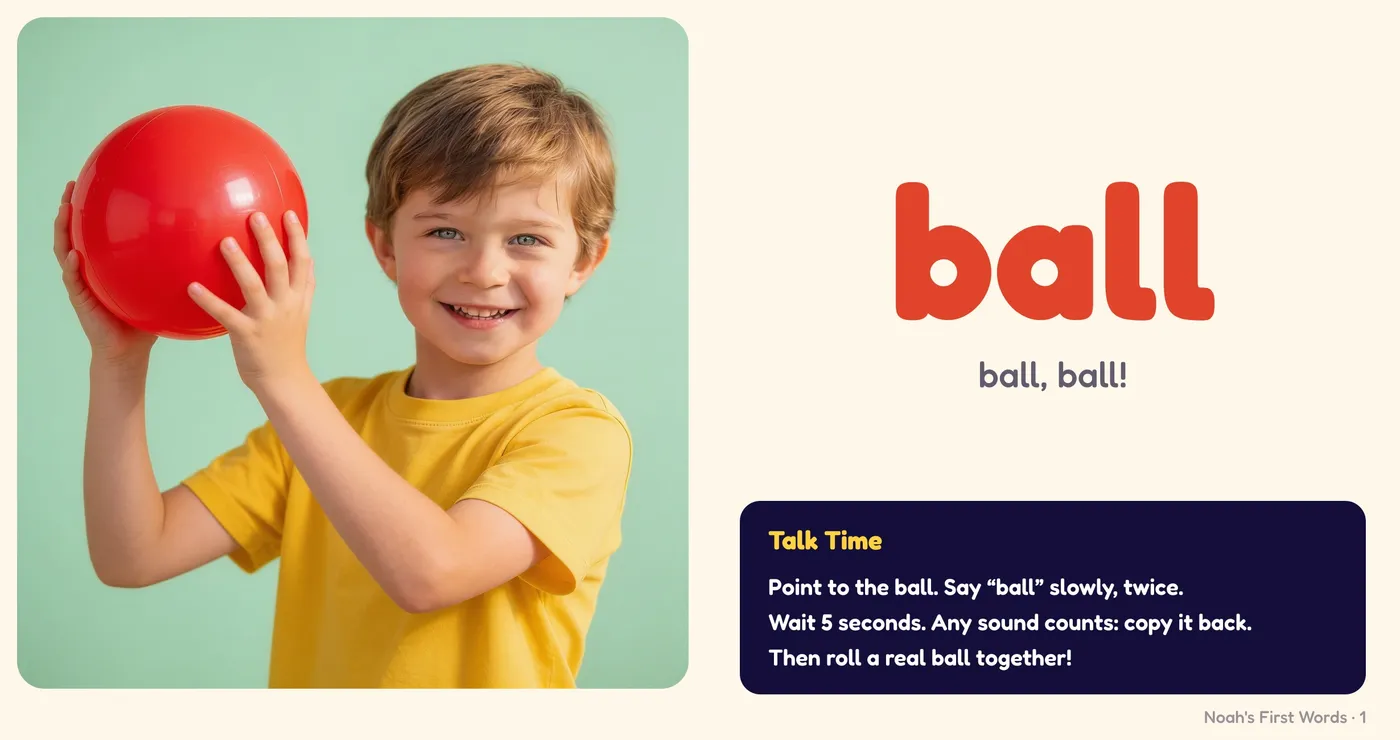
Our first words flashcards take that one step further. My First Words is a learn to talk flashcard book made from one photo. It starts with 8 fun sounds, moves on to 10 first words from a toddler's day (hi, up, more, go, ball, milk, no, all done, bye-bye and what your child calls you) and ends with 4 baby signs. Every page has a Talk Time tip for you. You can add the words your child already says, and words from your home language, too.
If your toddler is starting to enjoy letters, the alphabet flashcards in My First Alphabet Book pair one letter with one everyday thing, so they double as a first words book. And the animal flashcards book is full of the animal sounds toddlers love to copy.
How many words should a toddler say?
Every child is different, and there's a wide range of normal. The CDC milestone checklists are a helpful guide. By 15 months, most children try to say one or two words besides "mama" or "dada". By 18 months, most try to say three or more. By 2 years, most say at least two words together, like "more milk", and point to things in a book when you ask.
Understanding usually runs ahead of talking. Many toddlers follow simple directions and know dozens of words long before they say them.
When to talk to a professional
Trust your gut. If you have concerns about how your child understands or uses words, talk to your pediatrician or family doctor, or to a speech-language pathologist. You don't have to wait and see.
Ask sooner if your child uses few gestures like pointing or waving, doesn't respond to their name, or loses words they used to say. In the US, you can contact your state's early intervention program directly. In Canada, your family doctor or public health unit can point you to preschool speech and language services, and many provinces let parents contact them directly.
For more on this, read 2 year old not talking but understands everything? What parents can try at home, or visit our page for all kinds of talkers.
A first words book starring your child
My First Words: Walk the Talk Planet turns one photo into a learn to talk book with fun sounds, first words and baby signs on every page. You see the cover free before you pay.
A fun story with play ideas for parents. Not a substitute for speech therapy.