Show a toddler a cartoon dog and a photo of the family dog. Which one gets the bigger smile, the louder "woof", the faster point?
For many little ones, it is the photo. Real pictures look like the world they live in. That makes them a great fit for first words. This post covers why photo books for toddlers work so well, what the research suggests, and simple ways to play with them.
What are photo books for toddlers?
A photo book shows real things: a real ball, a real cup, a real cat. Some are big board books of everyday objects. Some show babies' faces. Some are homemade albums of family, pets and places.
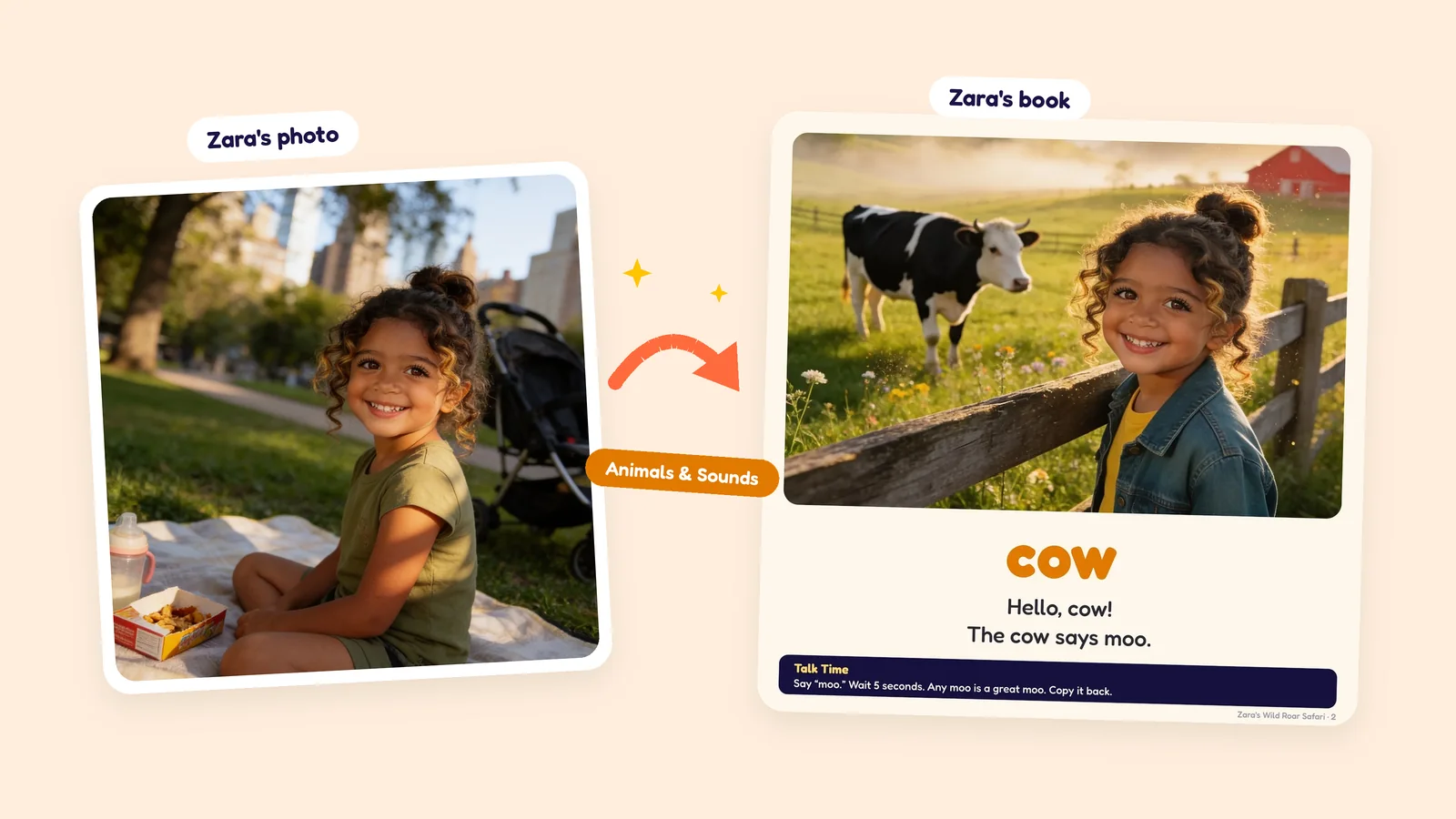
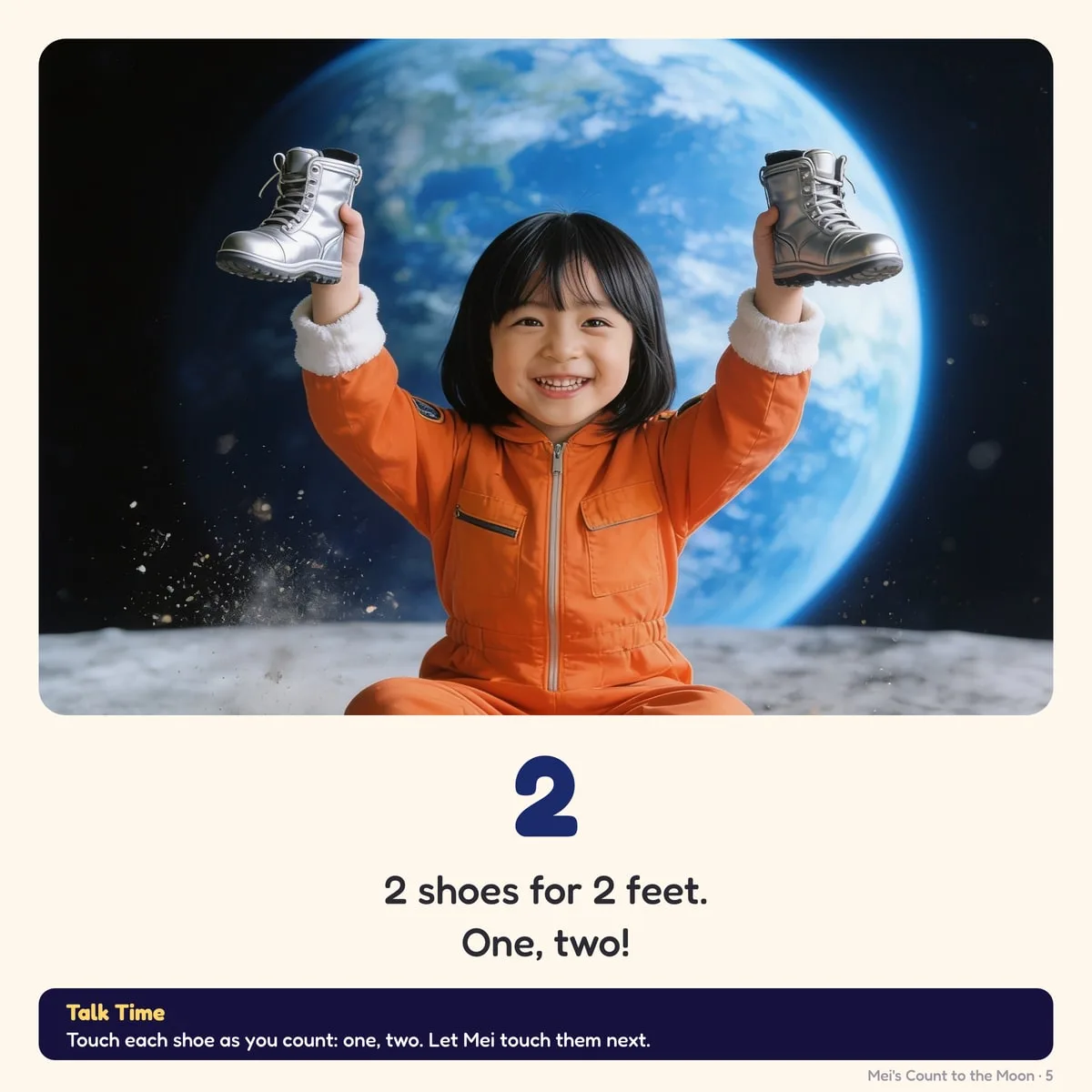
There is a newer kind, too: books that star your own child. The pictures are made from your photos, so the face on every page is one your child knows.
Toddlers love all of these for the same simple reason. They recognize what they see.
Why books with real pictures for toddlers may help
Learning a first word takes a few steps. Your child hears "ball". They see a ball. They link the sound to the thing. Later, they see a different ball and know it is a ball too.
A book adds one more step. The child has to link a picture to the real thing. For a very young child, that is not always easy. A drawing of a ball with a smiley face and big eyes is fun, but it does not look much like the ball in the toy box.
Real photos make that step smaller. The ball in the book looks like the ball on the floor. So when you point and say "ball", your child may find it easier to connect the word to real life.
Photos also invite talk. "That's a dog, like Buddy!" "Where's your cup?" The book becomes a bridge to the room around you.
What the research suggests
Researchers have looked at this question for years. Here is a fair summary.
- In a well-known study by Ganea, Pickard and DeLoache, 15 and 18 month olds learned a new word from a picture book, then were asked to find the real object. They made that jump more often when the book used photographs or realistic drawings than when it used cartoons. The youngest children only made the jump from the more realistic pictures.
- A later review by Strouse, Nyhout and Ganea looked at many studies of picture books. Its summary: for young toddlers, transfer from photographs was easiest, and from cartoons the hardest. Older children handle cartoons better as they grow.
- A small study with autistic children, published in the Journal of Autism and Developmental Disorders, found they remembered new object names better when they learned them from color photographs than from black-and-white cartoons.
These are small lab studies, not promises. They suggest that real pictures may help some children map words to real objects. Cartoon books are still wonderful. Most children love both, and variety is good.
Choosing a first words book with real pictures
If you want a first words book with real pictures, here is what to look for.
- One thing per page, or a few big things with lots of space.
- Everyday words: ball, cup, shoe, dog, car, bath, more, all done.
- Plain backgrounds, so the object stands out.
- Sturdy pages that little hands can turn.
- A few words, not many. A label or a short line is plenty.
Popular choices include big photo word books like First 100 Words by Roger Priddy, and books of babies' faces like Global Babies. You can also make your own: print photos of your child's cup, shoes, pet and grandparents, and put them in a small album. That is a lovely way to start.
6 ways to play with a photo book
These ideas work with any photo book, homemade or bought.
- Point and name. Point to one thing and say one clear word. "Shoe." Then wait.
- Pause and wait. After you name a picture, count to five in your head. Give your child a turn to point, make a sound or try the word.
- Find the real thing. See a cup in the book? Go find a real cup. Hold it next to the page. "Cup! Here's your cup!"
- Say it again. Name the same picture a few times in different ways. "Dog. Big dog. Woof woof, dog!"
- Cheer every try. A point, a sign or a sound all count. Smile and say the word back.
- Add baby signs. Show simple signs for more, all done, help and eat when those pictures come up, and at meals too.
When to talk to a professional
Every child learns words at their own pace. Still, trust your gut. If you have concerns about how your child understands or uses words, talk to your pediatrician or family doctor, or to a speech-language pathologist. ASHA's public guide for families says you don't have to "wait and see" before getting support.
The CDC milestone checklists are a good guide. By 18 months, most children try to say three or more words besides "mama" or "dada". By 2 years, most say two words together, like "more milk", and point to things in a book when you ask.
Ask sooner if your child uses few gestures, does not respond to their name, or loses words they used to say. In the US, you can also contact your state's early intervention program. In Canada, your family doctor or public health unit can point you to preschool speech and language services, and many provinces let parents contact them directly.
For more on this, read 2 year old not talking but understands everything? What parents can try at home.
Sources:
- Strouse, Nyhout and Ganea (2018), The Role of Book Features in Young Children's Transfer of Information from Picture Books to Real-World Contexts, Frontiers in Psychology (includes Ganea, Pickard and DeLoache, 2008)
- Carter and Hartley, photographs versus cartoons for learning object names, Journal of Autism and Developmental Disorders (PubMed Central)
- CDC milestones by 18 months and by 2 years
- Late Talker or Language Problem? (ASHA's public site)
- Caring for Kids (Canadian Paediatric Society): Read, speak, sing to your baby
Make a photo book starring your child
The most familiar face of all is your child's own. My First Words: Walk the Talk Planet turns one photo into a photo-real learn to talk book. You can add Mom, Dad or Grandma, the words your child already says, and the signs you use. Every page has one or two words and a Talk Time tip for you.
You see the cover free before you pay. For more ideas, visit our page for all kinds of talkers, or see our best books for late talkers.
A fun story with play ideas for parents. Not a substitute for speech therapy.